PeptProblog
InícioTratamentoComo UsarEfeitos ColateraisAlimentação
Baixar App
PeptPro
blog

Conteúdo baseado em evidências para apoiar quem leva o protocolo de peptídeos a sério.

Navegação

  • Início
  • Categorias

Categorias

  • Tratamento
  • Como Usar
  • Efeitos Colaterais
  • Alimentação
  • Exercício e Corpo
  • Saúde
  • Saúde Mental

App PeptPro

Acompanhe seu protocolo de peptídeos diretamente no celular.

Baixar naApp Store
DISPONÍVEL NOGoogle Play
© 2026 PeptPro. Todos os direitos reservados.
PrivacidadeTermos de Uso
  1. Início
  2. ›Blog
  3. ›Exercício e Corpo
  4. ›Peptides for Muscle Building: Why Your Training Log Comes First
Exercício e Corpo

Peptides for Muscle Building: Why Your Training Log Comes First

13 de out. de 2026·9 min de leitura·0 visualizações·Equipe Editorial PeptPro
Peptides for Muscle Building: Why Your Training Log Comes First

Before asking about peptides for muscle building, audit your training log. Many plateaus may begin as measurement problems before they become biology problems.

Your bench press has been stuck at the same number for six weeks. Your squat hasn't moved since spring. The first thought most lifters have is simple: what can I add? A supplement, a new program, or a peptide someone mentioned in a gym group chat. The search for peptides for muscle building often starts the moment the numbers stop climbing. Before you go down that road, though, look at your own records. Many plateaus may begin as measurement problems before they become biology problems.

This post is for intermediate lifters who already train three to five days a week and keep some kind of record. We'll walk through how to audit your training before any conversation about compounds. We won't promise results, and nothing here replaces advice from a qualified doctor. Think of it as a checklist for getting your own data in order.

What Your Training Log Shows That the Scale Cannot

Progressive overload is the gradual increase in load, reps, or sets over time. It's the principle that gives your muscles a reason to adapt. A scale tells you body weight. A forum tells you what worked for someone else, usually without the context. A log tells you what you actually did, week after week.

One simple number to watch is weekly tonnage, calculated as sets times reps times load. If you do four sets of five at 100 kilograms, that's 2,000 kilograms for the exercise. Add up every exercise for the week, then plot the totals. A flat or falling line over several weeks gives you a far clearer signal than how you felt on Tuesday.

Reps in reserve and RPE help you check effort. Both estimate how many more reps you could have completed before failure. A set that feels brutal may still have several reps left, and a set that feels easy may be closer to the edge than you think. Writing the estimate down, session after session, shows you the real pattern.

Consider a fictional lifter we'll call Marco. His log showed the same top set of 100 kilograms for five weeks straight. He felt like he was working hard every session, so he assumed the bar was simply too heavy. When he added up his weekly numbers, his total volume hadn't moved at all. The fix wasn't a new compound. It was a deliberate plan to add one set at a time and record every change.

Registre seu peso e sincronize passos e treinos com o Apple Health.

Disponível agora gratuitamente

Integração com Apple Health

Sincronize passos, treinos e dados de atividade diretamente do Apple Health. Tenha uma visão completa dos seus movimentos diários ao lado do seu protocolo.

Baixar naApp Store
DISPONÍVEL NOGoogle Play

Artigos Relacionados

Baixar naApp Store
DISPONÍVEL NOGoogle Play
Registrar no app

Four Training Variables to Audit First

a table topped with bottles of vitamins and pills

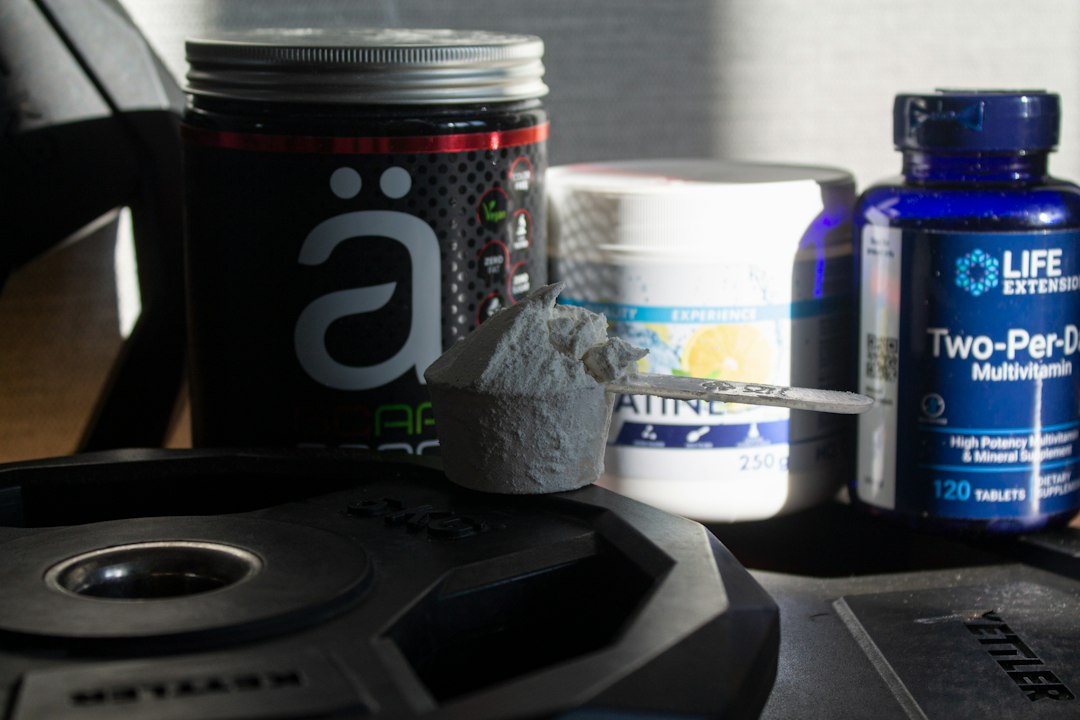
Before any peptide conversation, check these four areas in your own records.

Weekly sets per muscle group

Count sets per muscle group, not per exercise. A bench press and a push-up both load the chest, and a row counts toward your back. A meta-analysis by Schoenfeld, Ogborn, and Krieger, published online in 2016 in the Journal of Sports Sciences, examined the relationship between weekly resistance training volume and increases in muscle mass, and it describes a dose-response pattern. Open the paper and look up the specific ranges it reports yourself, rather than relying on a blog summary, this one included.

Exercise selection and range of motion

Ask whether each muscle trains through a full range of motion. A half squat and a full-depth squat load the legs differently, and so does a shallow bench compared with one that touches the chest. Choose exercises you can progress and repeat consistently. If your log shows lots of partial reps or constantly changing variations, the numbers will never tell a clean story.

Recovery between sessions

Count your total weekly sessions and check whether you take deloads. A deload is a planned week with lower volume or intensity. Many lifters never take one, then wonder why performance drops. If you've gone months without a lighter week and your numbers are sliding, recovery may be the variable to fix, not the barbell.

Technique consistency

Film one set every two weeks from the same angle, then compare depth and bar path side by side. Memory drifts, and form drifts with it. A squat that felt deep in March might sit a few centimeters higher by May. The video catches what your sense of effort hides.

Protein, Sleep, and Energy: The Quiet Limits

Protein is usually the first place to look. Morton and colleagues published a systematic review and meta-analysis in the British Journal of Sports Medicine in 2018 on protein supplementation and gains from resistance training. The authors reported that additional benefits appeared to level off at intakes around 1.6 grams per kilogram of body mass per day. Read the paper directly before you rely on that figure, since the analysis includes subgroups and conditions that a summary will flatten. To audit your own intake, log everything you eat for seven days, add up the protein, and divide by your body weight in kilograms. Many people find the total is lower than they assumed once they write it down. If you already keep training and food notes in separate places, a PeptPro account at peptpro.app lets you keep both in one dashboard, so your protein totals sit next to the sets they support.

Sleep matters just as much. The US National Heart, Lung, and Blood Institute describes how sleep deprivation affects health, performance, and daily functioning. Track your hours for two weeks. If you average less than you need and your log shows stalled sessions, that's a lead worth following before anything else. Energy balance works the same way. If you're trying to gain muscle, intake that stays too low can make heavy training feel flat. If you're cutting, watch for performance drops that show up in the numbers. A useful test: if your top sets fall for two or three weeks while sleep and protein look fine, look harder at total calories and recovery.

When a Peptide Question Makes Sense

A clinician might discuss a peptide only under specific conditions. Those usually include documented adherence to a well-designed program, a persistent and measurable stall, and no obvious lifestyle gaps left unaddressed. Notice that every condition depends on records. Without them, the conversation has nothing solid to stand on.

Bring your training log export, your protein and sleep notes, your bloodwork history if you have it, and a written list of goals. Be specific. A goal like add 10 kilograms to my squat in twelve weeks is far more useful than get stronger. Keeping those exports organized in PeptPro makes the handover faster, since they're the same records you would hand over at the appointment.

Competitive athletes need extra caution. Many peptide classes appear on the World Anti-Doping Agency prohibited list. Category S2, for example, covers growth hormone releasing peptides and other secretagogues. Check your governing body's rules before any decision, because testing and sanctions apply regardless of what a training partner says. The current list is published on the WADA website.

If you live in Brazil, check the current status of any product with ANVISA, the national health regulatory agency, before you discuss it. Access isn't guaranteed. A product sold online may not be authorized for your use, so let a licensed doctor explain what's legally available.

Four Questions to Answer Before Anything Changes

Write these answers down. If you can't answer one, that becomes your next task.

  1. Has your program run for at least eight to twelve weeks with logged progression?
  2. Do you know your protein, sleep, and recovery numbers, or are you guessing?
  3. Has a qualified professional reviewed your plan, and is your goal specific and measurable?
  4. What counts as success, and what would make you stop?

These four questions turn a vague wish into a decision you can defend. They also keep you honest about the variables you already control. If the answers feel fuzzy, the training log is the place to start, not the vial.

Registre seu peso e sincronize passos e treinos com o Apple Health.

Registrar no app

The Barbell Still Sets the Baseline

Training data gives the clearest signal about what needs to change. A peptide, if it ever enters the conversation, is one variable among several. It doesn't replace sensible volume planning, adequate protein, solid sleep, or regular deloads. Progress usually shows up over months, not in a single session, which is why a long, honest record matters so much.

Tracking across months also lets you spot the trend that a bad week hides. Keep that record in PeptPro, the log that tells the real story, and you'll have a clean history ready whenever you sit down to review progress with a coach or a doctor. Revisit the four questions above before each review, and update your answers as the data changes.

How do you audit your own program before changing anything? Share your method in the comments. I'd love to hear which numbers you track and which ones turned out to matter most.

FAQ

Can peptides build muscle on their own?

No single product replaces training, protein, and sleep. Evidence differs widely between compounds, so any option should be reviewed by a qualified doctor before you consider it.

How do I know if I'm really plateauing?

A real plateau usually means several weeks with no gain in load, reps, or weekly tonnage, after you've checked recovery, sleep, and nutrition. A single bad session doesn't count.

How many weekly sets should I do per muscle group?

Research describes a dose-response relationship between weekly sets and muscle growth. Start within your recovery capacity, then read the Schoenfeld, Ogborn, and Krieger meta-analysis directly for the ranges it reports.

Are peptides legal in Brazil?

It depends on the specific product and its current status. Check with ANVISA and a licensed physician before assuming any product is available or appropriate for you.


Sources

  • Dose-response relationship between weekly resistance training volume and increases in muscle mass: A systematic review and meta-analysis (Schoenfeld, Ogborn, Krieger, published online 2016, Journal of Sports Sciences)
  • A systematic review, meta-analysis and meta-regression of the effect of protein supplementation on resistance training-induced gains in muscle mass and strength in healthy adults (Morton et al., 2018, British Journal of Sports Medicine)
  • Sleep Deprivation (National Heart, Lung, and Blood Institute)
  • World Anti-Doping Agency Prohibited List
  • ANVISA, Agência Nacional de Vigilância Sanitária

Aviso: Este conteúdo é apenas informativo e não substitui orientação médica profissional. Consulte sempre seu médico antes de iniciar, alterar ou interromper qualquer tratamento.

0 visualizações
Compartilhar
Ver todos
Preservar massa magra com GLP-1: proteína e força durante a perda de peso
Exercício e Corpo

Preservar massa magra com GLP-1: proteína e força durante a perda de peso

Apetite menor pode levar parte do músculo junto com a gordura. Veja como proteína e treino de força ajudam a segurar a massa magra.

13 de out. de 2026 · 8 min de leitura
Antes da agulha, o halter: o que o treino ainda faz por você quando o assunto é peptídeos para musculação
Exercício e Corpo

Antes da agulha, o halter: o que o treino ainda faz por você quando o assunto é peptídeos para musculação

Antes de pensar em qualquer peptídeo para musculação, veja o que o treino de força, a proteína e o sono ainda fazem por você.

13 de out. de 2026 · 9 min de leitura
Peptídeos para quem treina: quando faz sentido, critérios e limites
Exercício e Corpo

Peptídeos para quem treina: quando faz sentido, critérios e limites

Veja os critérios para decidir se peptídeos fazem sentido para quem treina, quais cenários pedem cautela e como checar procedência antes de qualquer passo.

12 de out. de 2026 · 8 min de leitura