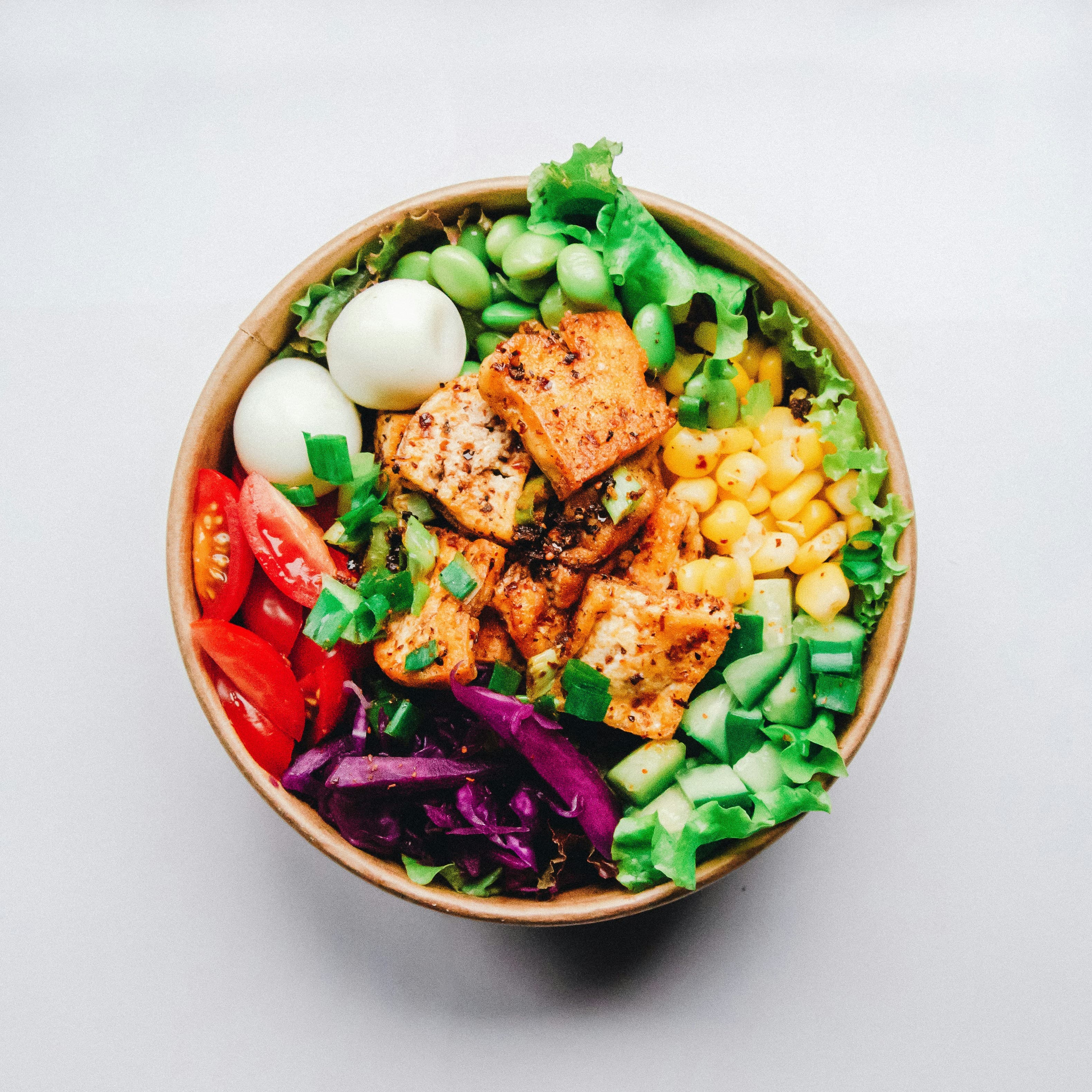
Meal Structure for Prolonged Satiety
The most practical framework is to think about every meal in terms of three components: a protein source, a fiber source, and a modest amount of healthy fat. That combination slows digestion, keeps blood sugar steady, and gives your body the nutrients it needs while you are in a caloric deficit.
For protein, aim for at least 25 to 30 grams per main meal. That is roughly a palm-sized portion of chicken breast, fish, or tofu, a cup of Greek yogurt, or two eggs plus a serving of legumes. If you are active or older, you may need more, and that is a conversation worth having with your healthcare provider.
For fiber, target 25 grams per day total, distributed across meals. A simple way to hit that is to include vegetables at lunch and dinner, a serving of fruit or legumes with breakfast, and whole grains instead of refined options. A half-cup of cooked lentils alone gets you to about 8 grams of fiber. A medium apple with the skin on adds another 4 or 5 grams.
Healthy fats from foods like avocado, olive oil, nuts, and seeds do not need to be measured precisely. A couple of tablespoons of olive oil in cooking or dressing, a quarter of an avocado, or a small handful of almonds adds enough fat to help with nutrient absorption and satiety without pushing calories too high.
One habit that helps more than people expect is front-loading protein at breakfast. If you start the day with eggs, Greek yogurt, or a protein smoothie, you set a different tone for the rest of the day. You are less likely to feel ravenous by mid-morning and make a poor choice, and you distribute your protein intake more evenly across the day, which is better for muscle preservation than cramming it all into dinner.
Spacing meals two to four hours apart also helps. GLP-1 medication reduces appetite between meals, but when you do eat, you want those meals to count. Grazing throughout the day usually leads to picking foods that are convenient rather than nutritious.