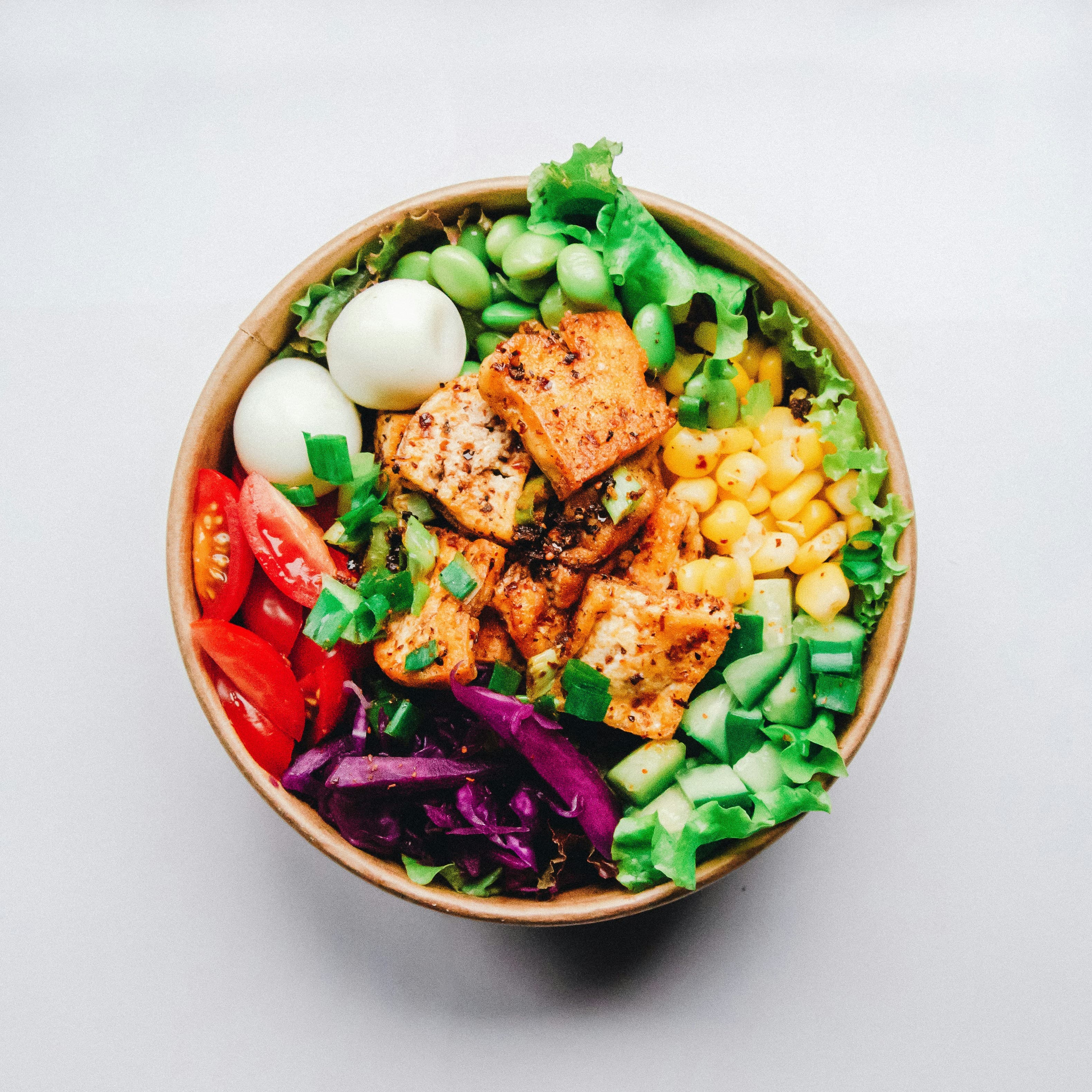
When you plan meals around your protein intake, the PeptPro meal logger keeps everything organized alongside your dose history. Take a look.
With the appetite reduction that GLP-1 agonists cause, many people lose their internal guide for eating. Hunger stops being a reliable signal, and without advance planning, it is easy to end up with meals that are too small or to skip eating without noticing. Structuring meals ahead of time prevents this back-and-forth and makes sure your body keeps getting the nutrients it needs.
Why planning matters more on GLP-1
When you used to eat on impulse, driven by hunger, you probably had an implicit structure that ensured a certain variety and amount. With reduced appetite, that system disappears. This does not mean you no longer need to eat well. It means the usual signals have stopped working as a guide, and without active planning, eating becomes random.
Another issue: many people report eating very little during the day, then feeling hungrier at night when the medication effect is lower, and overeating as a result. This is not because the body needs more food at night. It is because during the day the body was left with insufficient input and went into deficit. Distributing meals properly prevents this cycle.
How to distribute nutrients across the day
Protein needs to be in every main meal. You do not need to overload a single meal with protein. What works better is spreading intake across three to four times during the day, always including a quality protein source: eggs, chicken, fish, legumes, or supplementation when recommended.
Vegetables and healthy fats go alongside the protein. They slow absorption and help maintain satiety longer, which is especially useful when the natural satiety window from GLP-1 is already shorter.
Complex carbohydrates, such as sweet potato, brown rice, or oats, provide sustained energy without glucose spikes. Avoiding highly refined carbs helps reduce the energy crashes that follow spikes.
Weekly planning saves effort during the week
Setting aside an hour on Sunday to plan the week of meals makes a real difference in practice. It does not need to be elaborate. A simple outline of what you plan to eat for lunch and dinner across the week organizes your shopping and reduces the chance of arriving at midday with no idea what to eat.
For people who work away from home, having prepped meals ready or knowing exactly what to order at a restaurant avoids impulsive choices. With reduced appetite, the tendency is to order smaller portions or choose lighter options, and having clarity about that helps.
Eating out requires special attention
Restaurants tend to serve large portions. With less appetite, a strategy is to order a protein-rich starter before the main course, or split a plate with someone, or ask for half the portion and take the rest home. The goal is to make sure the meal has enough protein without forcing yourself to finish a full plate.
PeptPro lets you log what you ate and compare it against what you had planned. If you notice that most of your meals out are falling short on protein, you can identify the pattern and adjust.
In practice, this means(https://apps.apple.com/us/app/peptide-tracker-peptpro/id6764484462).
With PeptPro you have a history of meals, doses, and symptoms organized by date. Instead of trying to remember what you ate last week, you open the app and show everything to your doctor.
Common mistakes to avoid
Trying to eat the same portions you ate before treatment is a frequent mistake. Gastric volume is smaller on GLP-1 agonists, and forcing the same amount causes discomfort and can worsen side effects. The focus should be on quality and distribution, not volume.
Skipping meals because you do not feel hungry is also a mistake. Even without hunger, the body needs nutrients, and skipping meals leads to more fatigue and worse food choices when you finally do eat.
When you plan meals around your protein intake, the PeptPro meal logger keeps everything organized alongside your dose history. Get started here.