PeptProblog
InicioSaludEfectos SecundariosAlimentaciónEjercicio y Cuerpo
Descargar App
PeptPro
blog

Contenido basado en evidencia para apoyar a quienes se toman en serio su protocolo de péptidos.

Navegación

  • Inicio
  • Categorías

Categorías

  • Salud
  • Efectos Secundarios
  • Alimentación
  • Ejercicio y Cuerpo
  • Salud Mental
  • Cómo Usar
  • Tratamiento

App PeptPro

Sigue tu protocolo de péptidos directamente desde tu celular.

Descargar en elApp Store
DISPONIBLE ENGoogle Play
© 2026 PeptPro. Todos los derechos reservados.
PrivacidadTérminos de Uso
  1. Inicio
  2. ›Blog
  3. ›Alimentación
  4. ›How to Plan Protein and Fiber-Rich Meals During GLP-1 Treatment
Alimentación

How to Plan Protein and Fiber-Rich Meals During GLP-1 Treatment

24 jul 2026·8 min de lectura·6 visualizaciones·Equipe Editorial PeptPro
How to Plan Protein and Fiber-Rich Meals During GLP-1 Treatment

Learn how to plan protein and fiber-rich meals during GLP-1 treatment to maintain satiety, preserve muscle, and minimize side effects.

When you start GLP-1 treatment, your relationship with food changes in ways that take some getting used to. The medication works partly by slowing gastric emptying and acting on appetite signals in the brain, which means you feel full faster and stay full longer. That is a good thing when the goal is reduced calorie intake, but it also means the meals you eat need to work harder. If they do not deliver enough protein or fiber, you risk losing muscle mass, feeling letdown after meals, or dealing with constipation and other uncomfortable side effects.

That is where meal planning shifts from a nice-to-have to a genuine necessity. You do not need to become a nutrition perfectionist or spend hours in the kitchen every Sunday. You just need to understand which nutrients matter most during treatment and how to structure your day so those nutrients show up reliably.

Why Protein and Fiber Matter During GLP-1 Treatment

Protein is the most satiating macronutrient. Compared with carbohydrates and fat, protein keeps you full longer and supports the preservation of lean muscle mass. When you are eating less overall because of GLP-1 medication, losing some weight is expected. But you want that weight loss to come from fat, not from the muscle that keeps your metabolism running. Studies on weight loss show consistently that adequate protein intake protects muscle during caloric restriction, and that matters whether you are treating obesity, metabolic syndrome, or another condition where GLP-1 therapy is indicated.

Fiber plays a different but equally important role. Most people on GLP-1 medications report some degree of constipation, and fiber is the primary tool to prevent it. Beyond that, fiber slows digestion, which extends the feeling of fullness after meals. It also feeds a healthy gut microbiome, and that connection between gut health and metabolic function is well documented in the research literature.

The challenge is that both protein and fiber tend to come from foods that require some preparation. A protein shake is easy enough, but whole-food sources like legumes, fish, Greek yogurt, and poultry take more planning. And fiber-rich foods like vegetables, whole grains, and seeds do not appear on your plate by accident if you are not thinking ahead.

Escanea tu comida y registra calorías, proteína y macros en segundos.

Disponible ahora gratis

Escáner de Comidas

Escanea cualquier comida con la cámara para registrar automáticamente calorías, proteínas y macros. Reconocimiento con IA — sin entrada manual. Apunta, escanea, sigue adelante.

Descargar en elApp Store
DISPONIBLE ENGoogle Play

Artículos Relacionados

Descargar en elApp Store
DISPONIBLE ENGoogle Play
Registrar en la app

Meal Structure for Prolonged Satiety

The most practical framework is to think about every meal in terms of three components: a protein source, a fiber source, and a modest amount of healthy fat. That combination slows digestion, keeps blood sugar steady, and gives your body the nutrients it needs while you are in a caloric deficit.

For protein, aim for at least 25 to 30 grams per main meal. That is roughly a palm-sized portion of chicken breast, fish, or tofu, a cup of Greek yogurt, or two eggs plus a serving of legumes. If you are active or older, you may need more, and that is a conversation worth having with your healthcare provider.

For fiber, target 25 grams per day total, distributed across meals. A simple way to hit that is to include vegetables at lunch and dinner, a serving of fruit or legumes with breakfast, and whole grains instead of refined options. A half-cup of cooked lentils alone gets you to about 8 grams of fiber. A medium apple with the skin on adds another 4 or 5 grams.

Healthy fats from foods like avocado, olive oil, nuts, and seeds do not need to be measured precisely. A couple of tablespoons of olive oil in cooking or dressing, a quarter of an avocado, or a small handful of almonds adds enough fat to help with nutrient absorption and satiety without pushing calories too high.

One habit that helps more than people expect is front-loading protein at breakfast. If you start the day with eggs, Greek yogurt, or a protein smoothie, you set a different tone for the rest of the day. You are less likely to feel ravenous by mid-morning and make a poor choice, and you distribute your protein intake more evenly across the day, which is better for muscle preservation than cramming it all into dinner.

Spacing meals two to four hours apart also helps. GLP-1 medication reduces appetite between meals, but when you do eat, you want those meals to count. Grazing throughout the day usually leads to picking foods that are convenient rather than nutritious.

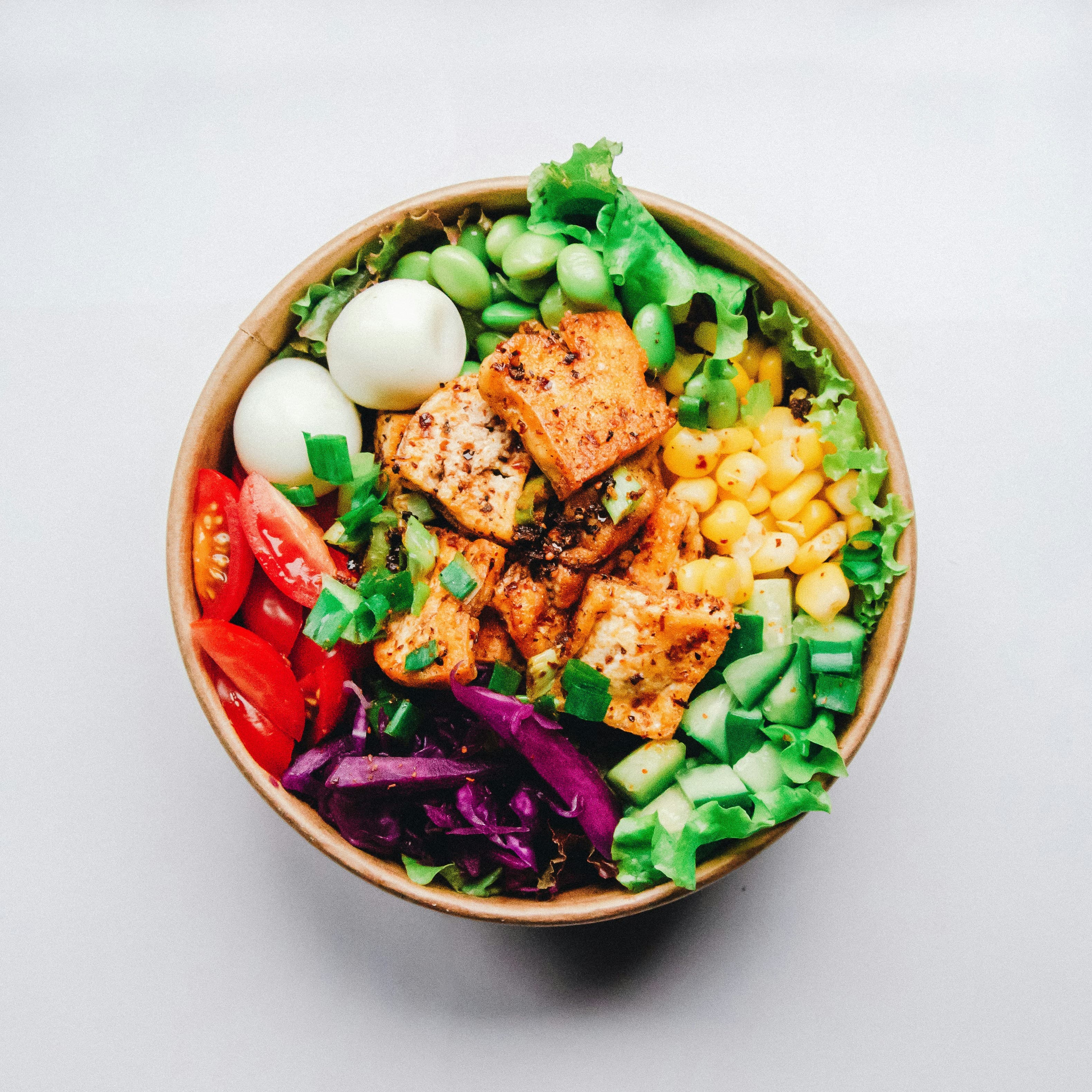
A Practical Day of Eating

Here is what a protein and fiber-forward day might look like, without requiring a culinary degree or a full-time meal prep hobby.

Breakfast could be two eggs scrambled with spinach and a side of black beans, topped with salsa. That gives you protein from the eggs, fiber from the spinach and beans, and the beans also contribute a bit of plant-based protein. If you prefer something lighter, Greek yogurt with ground flaxseed, berries, and a tablespoon of almond butter works well. The flaxseed is easy to sprinkle on top and adds a concentrated source of fiber and omega-3 fats.

Lunch might be a grain bowl with a base of quinoa or brown rice, roasted or raw vegetables, a serving of grilled chicken or tempeh, and a dressing made with olive oil and lemon juice. You can batch-cook the grains and roast a sheet pan of vegetables on the weekend, then assemble these bowls in under five minutes during the week.

For a snack, consider hummus with cucumber and bell pepper strips, or a small handful of walnuts with a piece of fruit. Both options deliver fiber and protein without being heavy.

Dinner could be baked salmon or another fish with a generous side of roasted broccoli and sweet potato. The salmon provides protein and anti-inflammatory omega-3 fats, while the broccoli and sweet potato bring fiber and slow-digesting carbohydrates. If you prefer plant-based protein, lentil soup with a side salad works just as well.

Before bed, if you find yourself hungry, a small serving of cottage cheese with pineapple or a protein shake made with milk rather than water adds casein protein that digests slowly overnight, supporting muscle maintenance while you sleep.

Escanea tu comida y registra calorías, proteína y macros en segundos.

Registrar en la app

How PeptPro Helps With Meal Planning

Writing down what you eat is one of the most effective ways to actually eat well, but it is easy to fall out of the habit without a simple system. PeptPro is built for exactly this. The app lets you log meals and track macronutrients in a way that does not feel like homework. You can record breakfast, lunch, and dinner as you go, and the meal history stays organized so you can see patterns over time.

If you are trying to hit a specific protein target, the food log makes it straightforward to check whether you are getting enough before the day is over. When you notice you are falling short on fiber, you can add a serving of vegetables or legumes to dinner without guessing. The app also connects to Apple Health, so your activity data and hydration levels are in the same place as your food records, giving you a more complete picture of your day.

Tracking becomes especially useful during medical appointments. When you log meals consistently, you have actual data to share with your healthcare provider instead of relying on memory. If side effects like constipation or nausea come up, it is easier to spot whether certain foods are contributing. Over weeks and months, that record shows whether your eating patterns are supporting the goals you set when starting treatment.

You can also use the app to set reminders for meals, which sounds basic but makes a difference when the medication suppresses hunger cues that would normally tell you it is time to eat. Skipping meals because you do not feel hungry sounds harmless, but it often leads to overeating later or missing out on nutrients your body needs during the adjustment period.

Start tracking your meals and protein intake with PeptPro. The app keeps your food history organized and makes it easy to see whether you are meeting your nutrition goals each day.

Planning meals around protein and fiber does not have to be complicated. Once you build a few habits, it stops feeling like planning and starts feeling like just eating. The key is starting simple, choosing one or two changes at a time, and using whatever tools make the process easier for you.

The adjustment period for GLP-1 treatment varies from person to person, and your nutrition needs will evolve as your dose changes and your body adapts. Checking in with a registered dietitian or your healthcare provider as you go helps you make those adjustments without guessing. But the daily habit of eating intentionally, built over weeks and months, is what gets results that stick.

Aviso: Este contenido es solo informativo y no sustituye la orientación médica profesional. Consulta siempre a tu médico antes de iniciar, cambiar o interrumpir cualquier tratamiento.

6 visualizações
Compartir

En este artículo

Ver todos
Alimentación

Cómo Controlar el Hambre con Medicamentos GLP-1

Guía completa sobre cómo controlar el hambre con medicamentos GLP-1. Estrategias de alimentación, hidratación y manejo del hambre emocional.

24 jul 2026 · 5 min de lectura
Alimentación

Mejores Suplementos para Tomar con GLP-1

Descubre los mejores suplementos para tomar con GLP-1: proteína, B12, vitamina D, omega-3 y más. Guía completa con recomendaciones.

24 jul 2026 · 5 min de lectura
Alimentación

Calidad de la Dieta y GLP-1: Lo que Comes Importa Tanto Como la Dosis

Cuando se habla de tratamiento con peptidos y GLP-1, la conversacion suele centrarse en la dosis, el horario de inyeccion y los efectos secundarios. P

15 jul 2026 · 4 min de lectura